
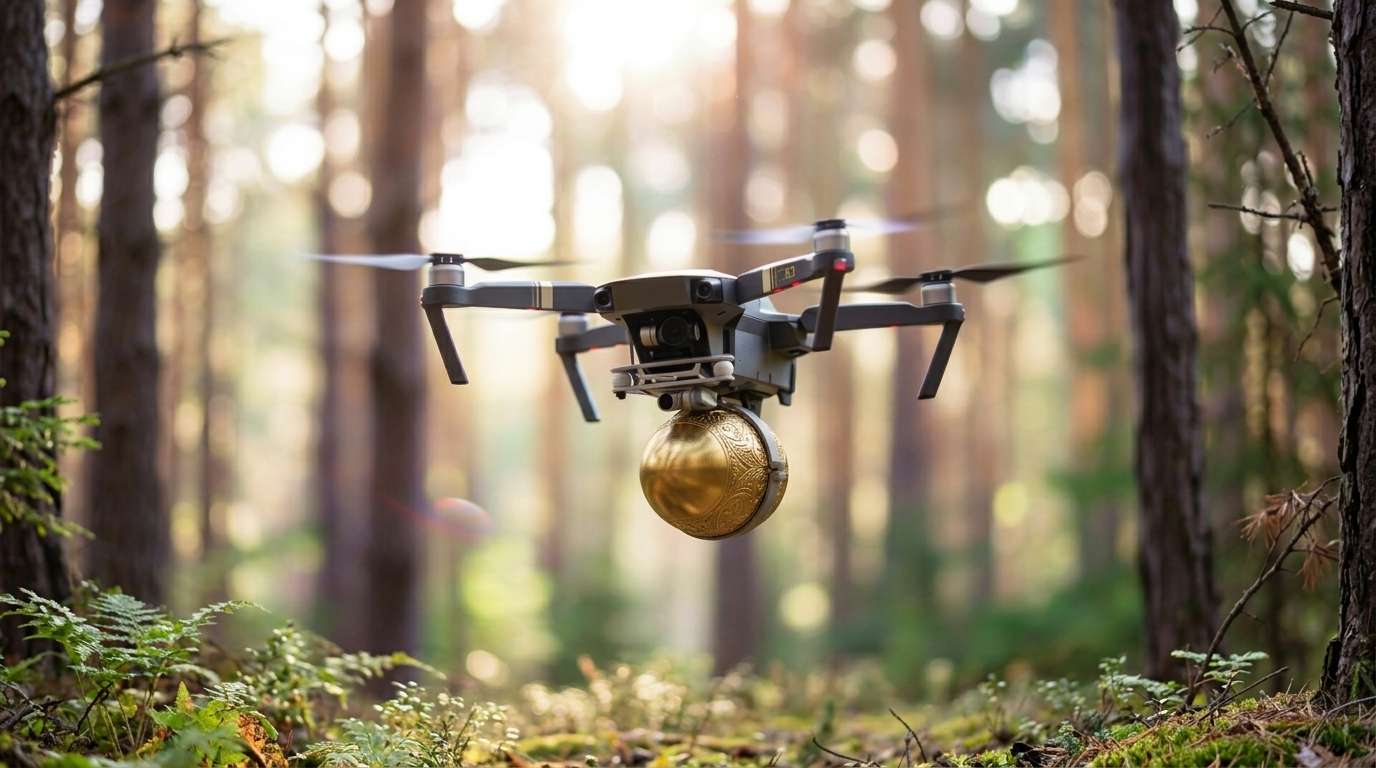
As the global drone industry continues to expand, businesses are looking beyond product innovation to find more efficient ways to source equipment, connect with suppliers, and manage international trade. Industrial drones, airborne payloads, components, and consumables are increasingly traded across borders, creating demand for reliable procurement networks that connect manufacturers, distributors, and buyers around the world.
In this environment, Hong Kong offers several advantages as an international trading hub. Its location in Asia, established commercial infrastructure, international business environment, and role as a gateway to mainland China and global markets make it a practical base for companies involved in the drone supply chain.
For businesses seeking competitive sourcing opportunities and streamlined international transactions, understanding Hong Kong’s role can help inform procurement and supply-chain strategies.
At Chenyi Aviation Technology, we leverage our Hong Kong base to connect upstream suppliers with downstream buyers, supporting supply-demand matching and international trading opportunities across the industrial drone industry.
Hong Kong is situated along major trade routes in Asia and has longstanding commercial connections with mainland China and international markets. This geographical position supports communication and business coordination between suppliers, trading partners, distributors, and customers across different regions.
For the drone industry, these connections are particularly relevant because equipment and components often originate from different manufacturers and move through multiple stages before reaching end users.
A Hong Kong-based trading company can help bridge these participants by coordinating sourcing inquiries, commercial negotiations, and cross-border transactions.
Whether a buyer is looking for an industrial drone platform, a specialized airborne payload, or replacement components, access to a well-connected trading network can make it easier to identify potential suppliers and explore suitable procurement options.
Mainland China plays a significant role in the global drone manufacturing and electronics supply chain. Its industrial ecosystem includes manufacturers and suppliers of drone platforms, motors, batteries, flight controllers, imaging equipment, communication systems, and other electronic components.
Hong Kong's proximity to mainland China provides a useful geographical and commercial connection to this manufacturing base.
For international buyers, however, identifying the right supplier can involve more than finding a manufacturer. Businesses must assess product specifications, order quantities, commercial terms, availability, quality requirements, and shipping arrangements.
A trading partner with access to relevant supplier networks can help coordinate these requirements and connect buyers with potential sources of industrial drone equipment.
For Chenyi Aviation Technology, this connection supports our focus on matching supply with demand and helping customers explore sourcing opportunities across the drone industry.
Hong Kong has a well-established international business environment, supported by commercial services, logistics providers, financial institutions, and professional service networks.
These resources are relevant to businesses engaged in international drone trading, where transactions may involve multiple parties, currencies, destinations, and contractual arrangements.
An effective trading process requires clear communication between suppliers and buyers, accurate commercial documentation, coordinated shipping, and an understanding of the requirements that apply to each transaction.
Operating from Hong Kong enables trading businesses to work within an international commercial environment while maintaining connections with regional suppliers and overseas customers.
Nevertheless, the requirements for individual transactions depend on the products involved, their origin and destination, and the applicable laws and regulations.
One of Hong Kong's notable characteristics is its free-port framework. In general, goods entering Hong Kong are not subject to customs tariffs, although certain goods are subject to specific duties, licensing, or other controls. This framework can be advantageous for eligible products moving through Hong Kong as part of international trading operations.
For companies trading industrial drones and related equipment, the potential benefits depend on the structure of each transaction and the movement of goods.
For example, a trading business may coordinate the sourcing of components from one market and arrange delivery to a customer in another. Hong Kong may serve as a commercial or logistical coordination point within this process.
However, a shipment passing through Hong Kong does not automatically qualify for tariff-free treatment in its final destination. Import duties, customs declarations, product restrictions, and other requirements may still apply in the destination market.
By understanding these distinctions and coordinating the relevant trade arrangements, businesses can make more informed procurement decisions and manage cross-border transactions more effectively.
The drone supply chain extends far beyond the finished aircraft. It includes manufacturers, component suppliers, payload developers, distributors, system integrators, maintenance providers, and industrial end users.
These participants often have different commercial priorities.
Manufacturers seek dependable demand and efficient distribution. Distributors require suitable product availability and competitive sourcing arrangements. Buyers need reliable equipment that meets technical specifications and budget requirements.
When these participants operate through fragmented networks, procurement can become time-consuming and unnecessarily complex.
A connected trading network helps bring supply and demand closer together by facilitating product inquiries, identifying potential suppliers, and coordinating commercial opportunities.
This is especially valuable for businesses sourcing several product categories, including:
Industrial drones: Platforms designed for professional and commercial applications.
Airborne payloads: Cameras, thermal imaging systems, mapping sensors, and other mission-specific equipment.
Drone components: Motors, propellers, flight controllers, electronic modules, and related parts.
Parts and consumables: Replacement components and operational supplies required for ongoing maintenance.
By coordinating sourcing across these categories, trading partners can help buyers explore a broader range of procurement options.
Multiple intermediaries can add communication steps, transaction costs, and complexity to international sourcing. Although intermediaries can provide valuable services, unnecessary trading layers may make procurement less efficient.
A more connected supply network can help businesses identify more direct sourcing opportunities where commercially and operationally appropriate.
This approach can support several objectives.
More competitive sourcing: Comparing suppliers and commercial offers helps buyers evaluate pricing and overall transaction value.
Improved communication: Direct coordination of specifications, quantities, and delivery expectations can reduce misunderstandings.
Greater sourcing flexibility: Access to multiple supplier relationships can help buyers consider alternatives when a preferred product is unavailable.
Better procurement coordination: Managing inquiries and commercial arrangements through a coordinated process can reduce the administrative burden on purchasing teams.
The objective is not simply to find the lowest quoted price. Effective procurement must also consider product quality, supplier reliability, compatibility, shipping costs, lead times, and applicable compliance requirements.
For international buyers, balancing these factors is essential to building a dependable supply chain.
Although Hong Kong offers advantages for international commerce, the drone industry operates within a regulatory environment that requires careful attention.
Depending on the product and destination, transactions may be subject to export controls, strategic trade requirements, import licensing, sanctions restrictions, radio-frequency regulations, battery transport rules, or other applicable requirements.
Certain advanced drone technologies and components may receive additional regulatory scrutiny. Batteries and other specialized products can also require specific shipping documentation and handling arrangements.
Businesses should therefore verify product classifications, supplier documentation, end-user requirements, and destination-country regulations before completing a transaction.
A sound procurement process incorporates regulatory checks from the beginning rather than treating compliance as a final administrative step.
This helps businesses reduce avoidable delays, manage transaction risks, and maintain more dependable international trading relationships.
As a Hong Kong-based company specializing in international trade within the drone industry, Chenyi Aviation Technology focuses on connecting supply with demand across domestic and global markets.
Our business model centers on supply-demand matching and trading opportunities for industrial drones, airborne payloads, parts, and consumables.
We aim to help customers navigate fragmented supplier networks by connecting upstream and downstream market participants and facilitating more efficient sourcing arrangements.
Our approach focuses on three key areas.
We connect purchasing requirements with relevant sourcing opportunities, helping buyers and suppliers explore potential commercial matches.
By seeking to reduce unnecessary intermediaries where possible and facilitating comparisons between sourcing options, we aim to support more competitive procurement decisions.
We help connect market participants across borders, supporting commercial communication and trading arrangements for industrial drone equipment and related products.
Through our Hong Kong base, we seek to make international drone procurement more connected, accessible, and commercially efficient.
The future of drone trading will be shaped by technological advances, evolving industrial applications, and the growing need for specialized equipment.
As businesses adopt drones for surveying, infrastructure inspection, agriculture, energy, and other professional uses, procurement requirements are likely to become increasingly diverse.
Companies will need access to broader supplier networks, reliable sourcing information, and flexible trading arrangements. Efficient supply-demand matching will remain important, particularly when procurement involves multiple product categories and international markets.
Hong Kong's role in this environment will depend on its ability to continue connecting regional manufacturing capabilities with international commercial demand while supporting efficient logistics, transparent transactions, and regulatory compliance.
For businesses engaged in drone trading, a strong international network can be an important source of flexibility and resilience.
Hong Kong offers a combination of geographical connectivity, international commercial infrastructure, proximity to mainland China's manufacturing ecosystem, and free-port advantages that can support global drone trading activities.
These characteristics make it a useful base for companies seeking to connect suppliers and buyers across the industrial drone supply chain.
However, the success of international procurement ultimately depends on more than location. Supplier reliability, product suitability, competitive commercial terms, efficient coordination, and regulatory compliance all play essential roles.
At Chenyi Aviation Technology, we use our Hong Kong base to connect upstream and downstream participants and facilitate trading opportunities for industrial drones, airborne payloads, parts, and consumables.
By helping bridge supply and demand across markets, we aim to support a more connected and efficient global drone procurement network.
Looking for a sourcing partner for industrial drones, airborne payloads, or drone components? Contact Chenyi Aviation Technology to discuss your procurement requirements and explore international trading opportunities.
About Chenyi Aviation Technology
Chenyi Aviation Technology is a Hong Kong-based international trading company specializing in the drone industry. We focus on supply-demand matching and trading services for industrial drones, airborne payloads, parts, and consumables, connecting suppliers and buyers to support cost-conscious procurement and global supply-chain connectivity.
Finding a petrol engine for a UAV is only the first step. As...
READ FULLThe industrial drone industry is evolving rapidly, creating new opportunities across sectors such...
READ FULLAs the global drone industry continues to expand, businesses are looking beyond product innovatio...
READ FULL

Have a question or need a quote? Fill out this form and our team will get back to you quickly!
